"We had seen life under a new aspect, the human biped reduced to his primitive condition. We had lived without law to protect, a roof to shelter, or garment of cloth to cover us. Our idea of what is indispensable to human existence and enjoyment had been wonderfully curtailed, and a horse, a rifle and a knife seemed to make up the whole of life's necessaries. Our prairie experience taught us to take profound contentment in the present, and have utter contempt for what the future might bring forth"
-- Francis Parkman, "The Oregon Trail", written 1846
Francis Parkman was a young, wealthy Easterner who after his Grand Tour of Europe decided that he wanted to experience the American West. His story of his summer on the prairie -- meeting pioneers heading to Oregon, getting dysentery (seriously unfun), living alone for weeks with the Sioux hunting buffalo and antelope -- became a time capsule of a land that was about to change forever. Within thirty years, the Sioux were relegated to a dusty reservation. The buffalo were nearly extinct. And by 1859, Oregon had amassed enough people to become the 33rd state of the Union.
Part of what makes the Oregon Trail game so engaging is a player has so much agency. You choose what to bring with you, what time of year you leave -- and the choices you make have massive implications. Do I bring spare axles? more ammunition, or food, or medicine? You've got a fixed budget, use it well!
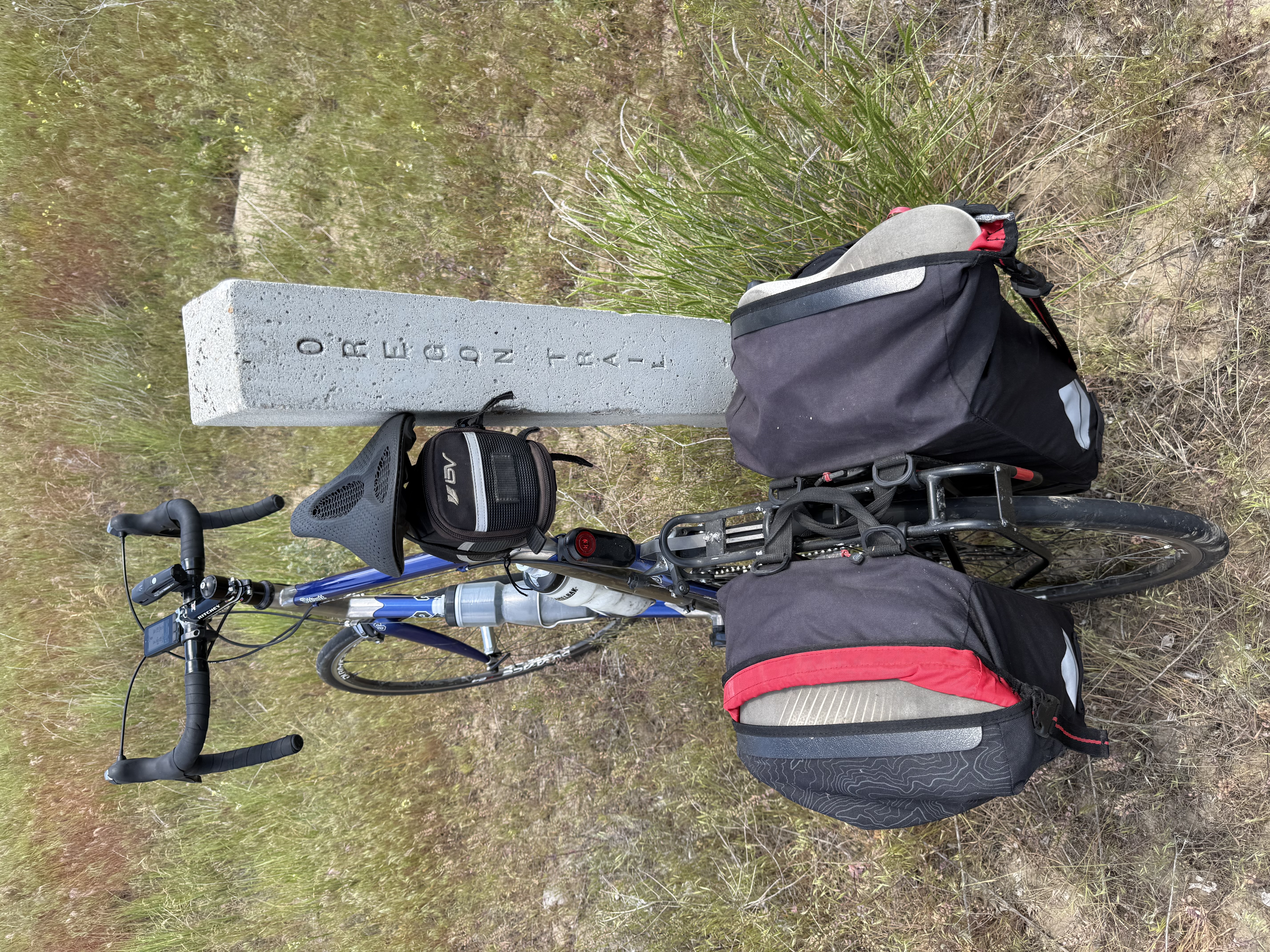
My last two trips, I've had my partner Sarah along as company, "sherpa", and "get out of jail free" card if anything went badly wrong. But this trip needed to be in the full spirit of the Oregon Trail: me, on my own, carrying what I thought I needed to get to Portland. My mistakes and oversights would have consequences. Everything has to fit in two panniers the combined size of a rollerboard, where every pound matters going up the mountains in front of me. I am hoping that I have chosen wisely. Like Parkman, I appreciate that a trip like this makes you realize that you really just need the bike, parts to maintain it, and minimal clothing and toiletries. Plus a laptop so I can share with all of you :).
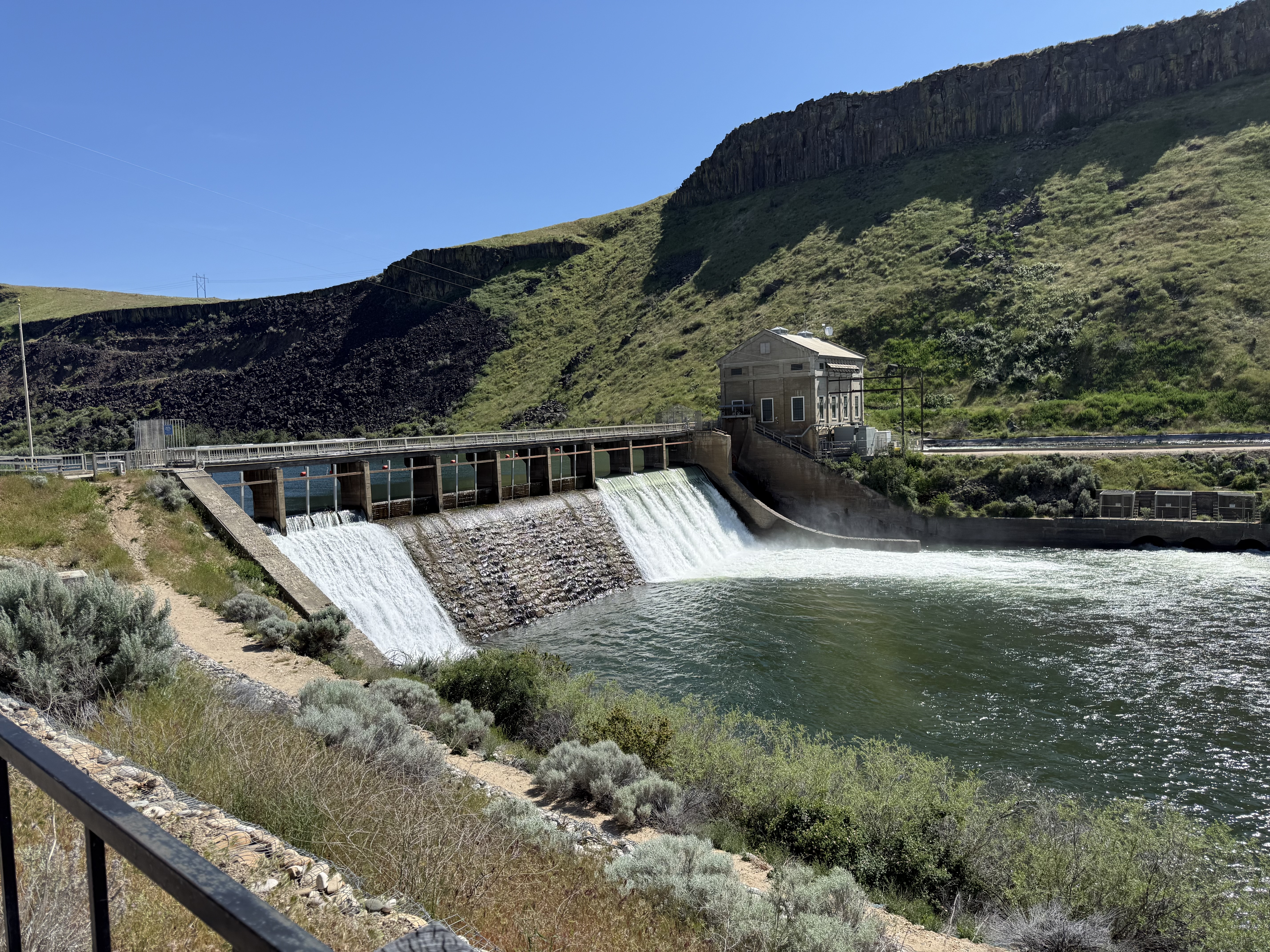
I'd never been to Boise, but enjoyed my short stay. It has a well-used Greenbelt along the river which gave me an opportunity to test the reassembled Tammi. I enjoyed a send-off dinner with my cousin Joe and his wife who are locals. I also videoed my opportunity to execute "Idaho Stops" (Idaho allows bicycles to treat stop signs as "yields", although the truck's reaction suggests I need a little more practice).
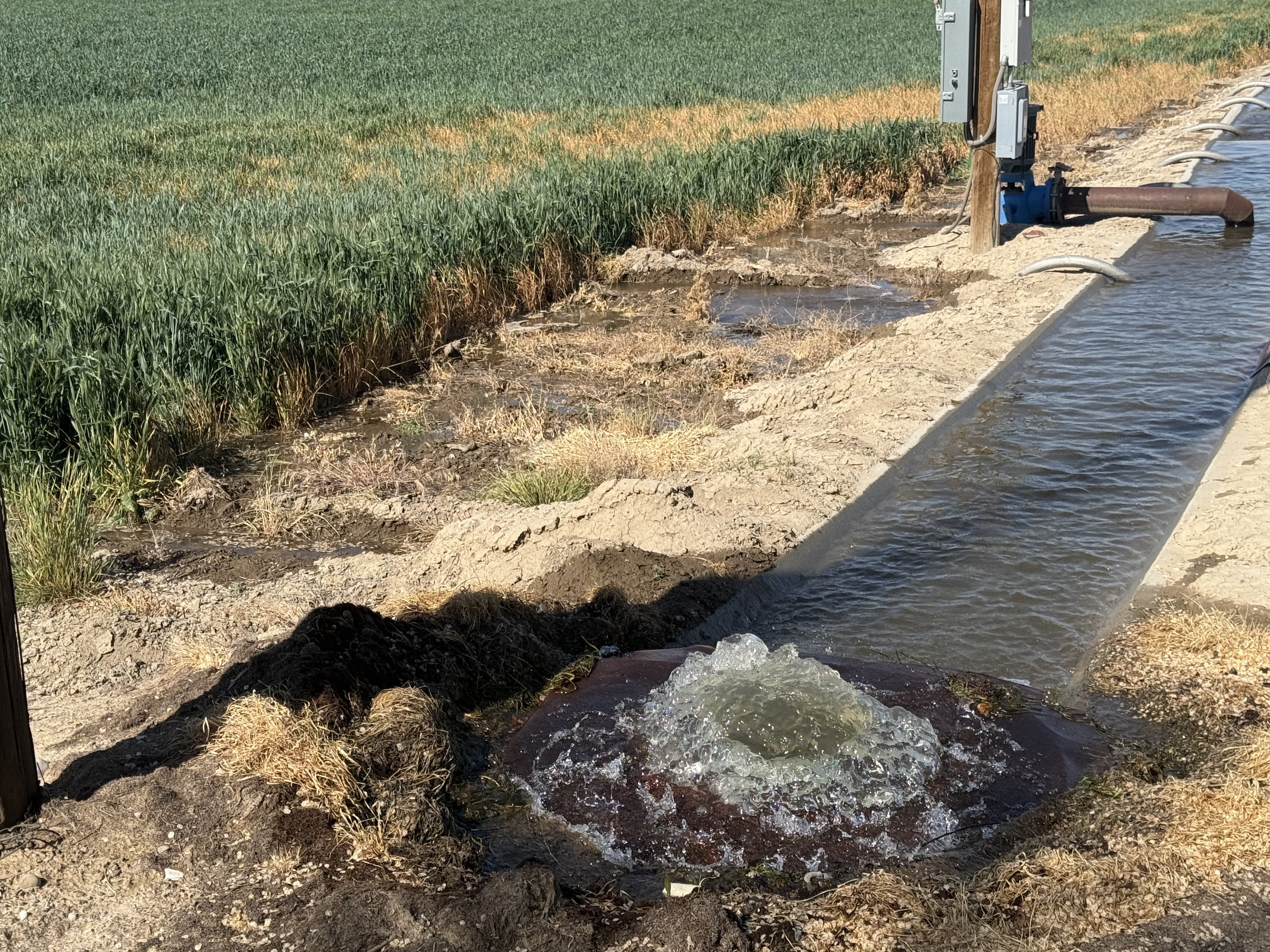
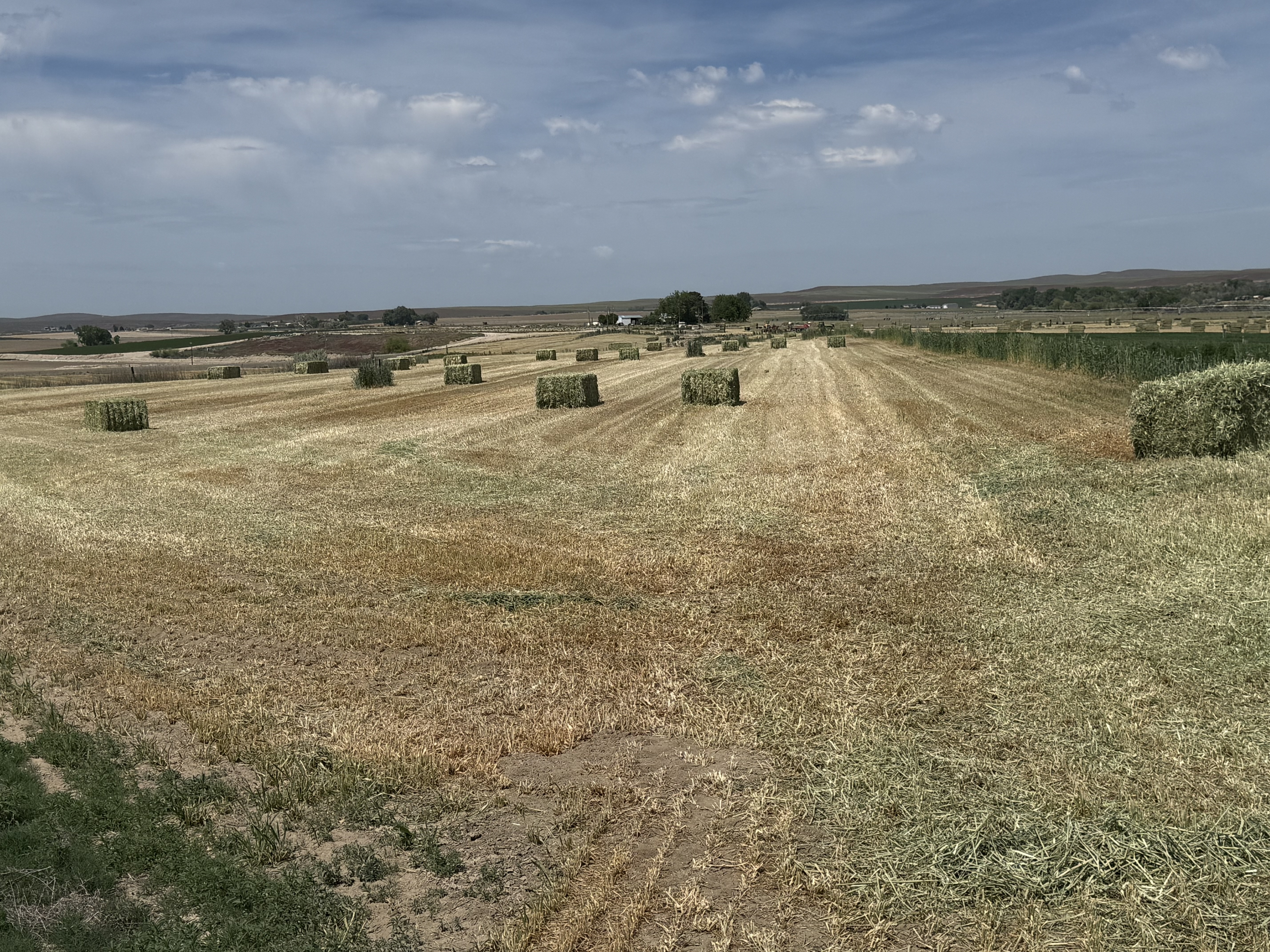
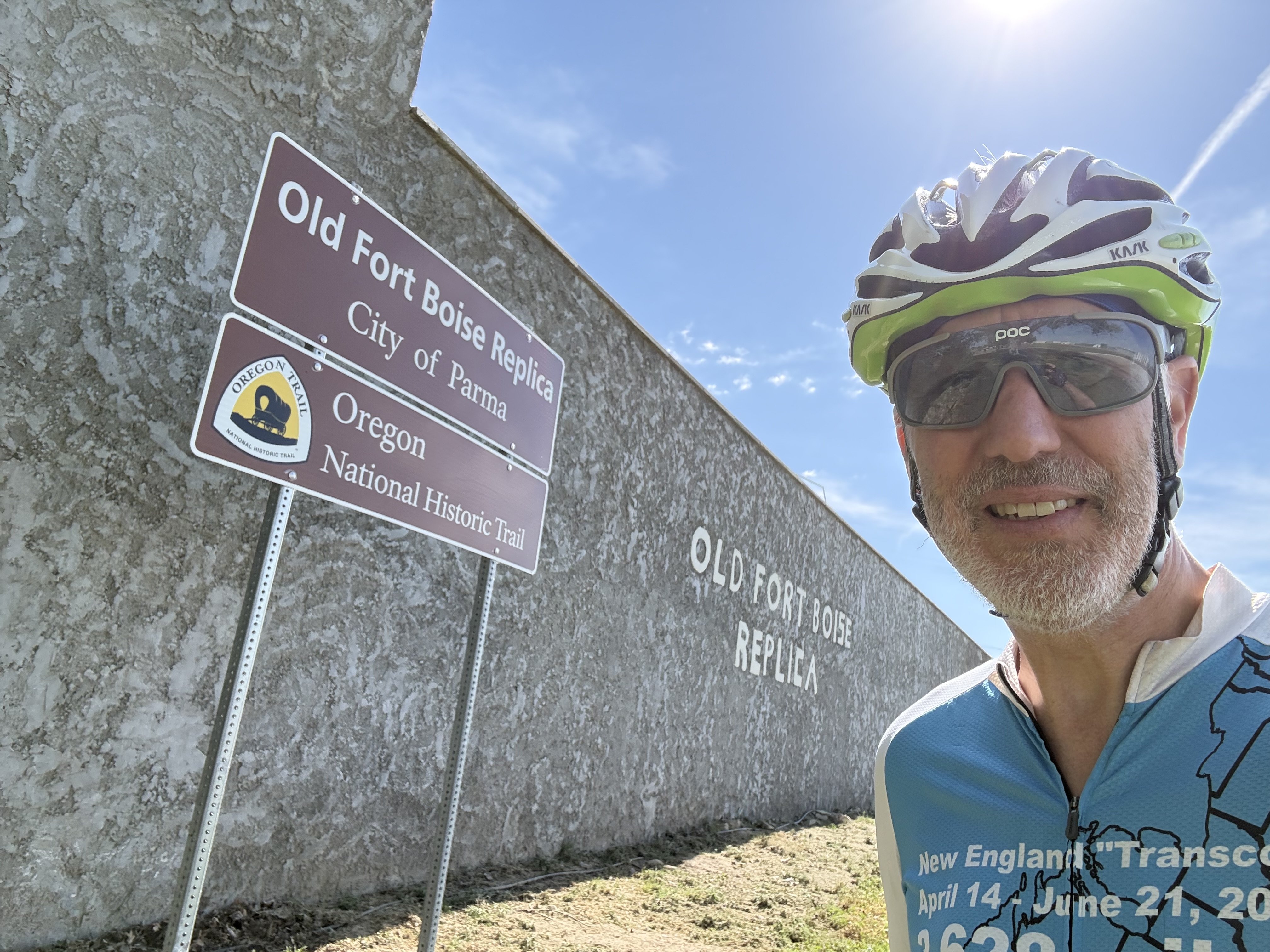
Beyond Boise, I rode into "Treasure Valley", a name dreamed up by a local business leader. The "treasure" is the bounteous agriculture, made possible by irrigation water from the Snake and Boise Rivers. The countryside reminded me of the Central Valley of California where I grew up -- flat as a pancake, long straight section roads empty of cars for miles, and fields of alfalfa, dairies, corn, and other things I couldn't identify. I stopped for lunch in Parma, a few miles from the Oregon border, after visiting the replica of the fort, or trading post, that supplied the Oregon Trail pioneers (on the frontier, "fort" meant trading post, the nearest army units were a thousand miles away).
I hit the diner just before opening and started chatting with an older couple while we waited. I shared what I was doing, they were impressed. They were farmers, and I shared my enthusiasm for what I had seen. By complete coincidence, they had moved to Idaho a decade earlier from the Central Valley -- it had become too hard and too expensive to do business in California. Electricity (for irrigation pumps) costs 6x in California what it does in Idaho. Plus they can count on water every year, unlike California which cuts back agricultural water during droughts. For the Oregon Trail pioneers, Treasure Valley was a wasteland -- farming only became possible after large government investment in irrigation networks, and there was no way to get product to market until the railroads arrived forty years later.
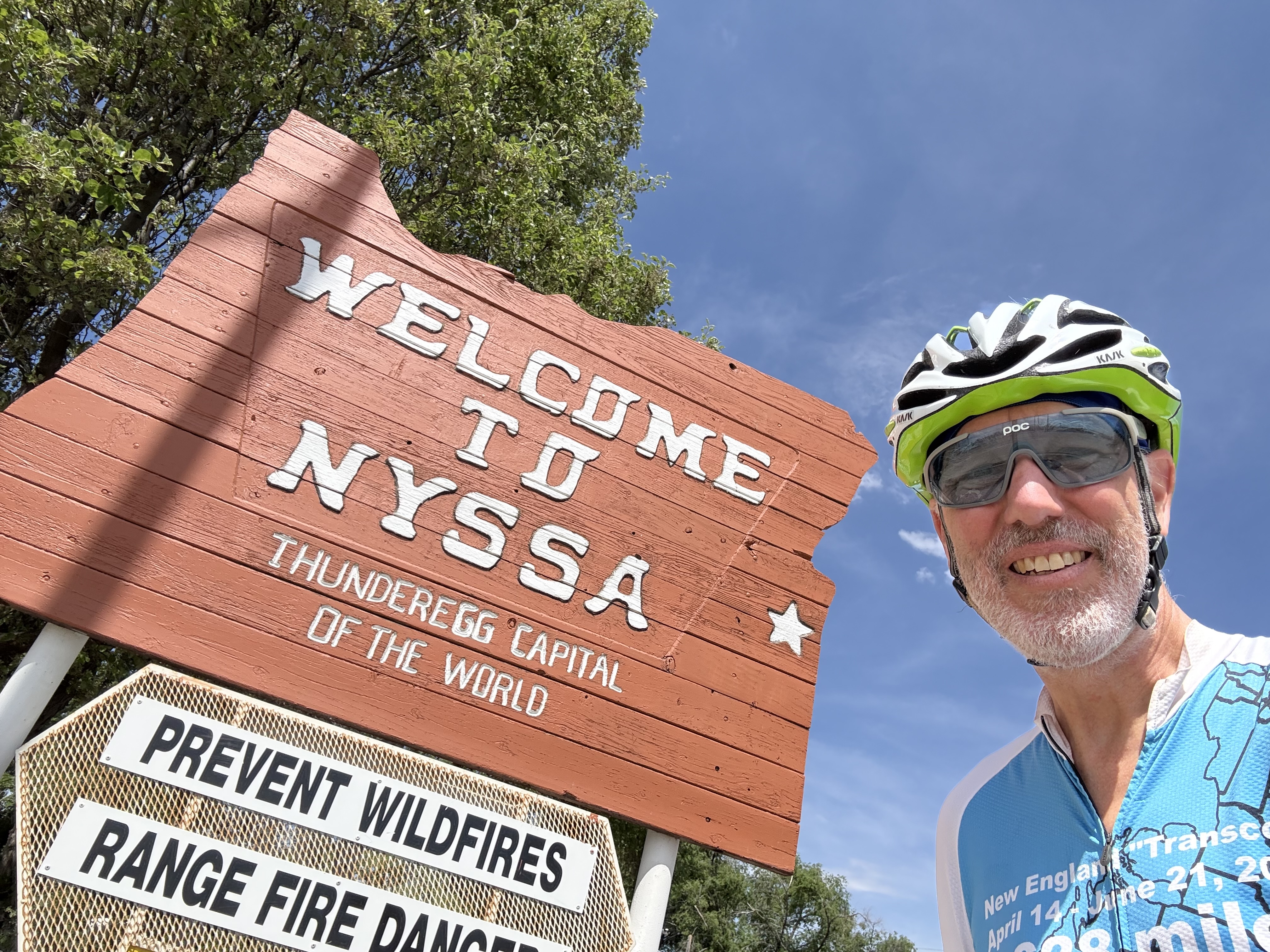
I crossed the Snake River into Oregon at Nyssa, the "Thunderegg Capital of the World". I had to look that one up -- round rocks formed under volcanic pressure that when cut open reveal geode-like patterns. The state rock of Oregon, and commonly found in Nyssa and surrounding towns.
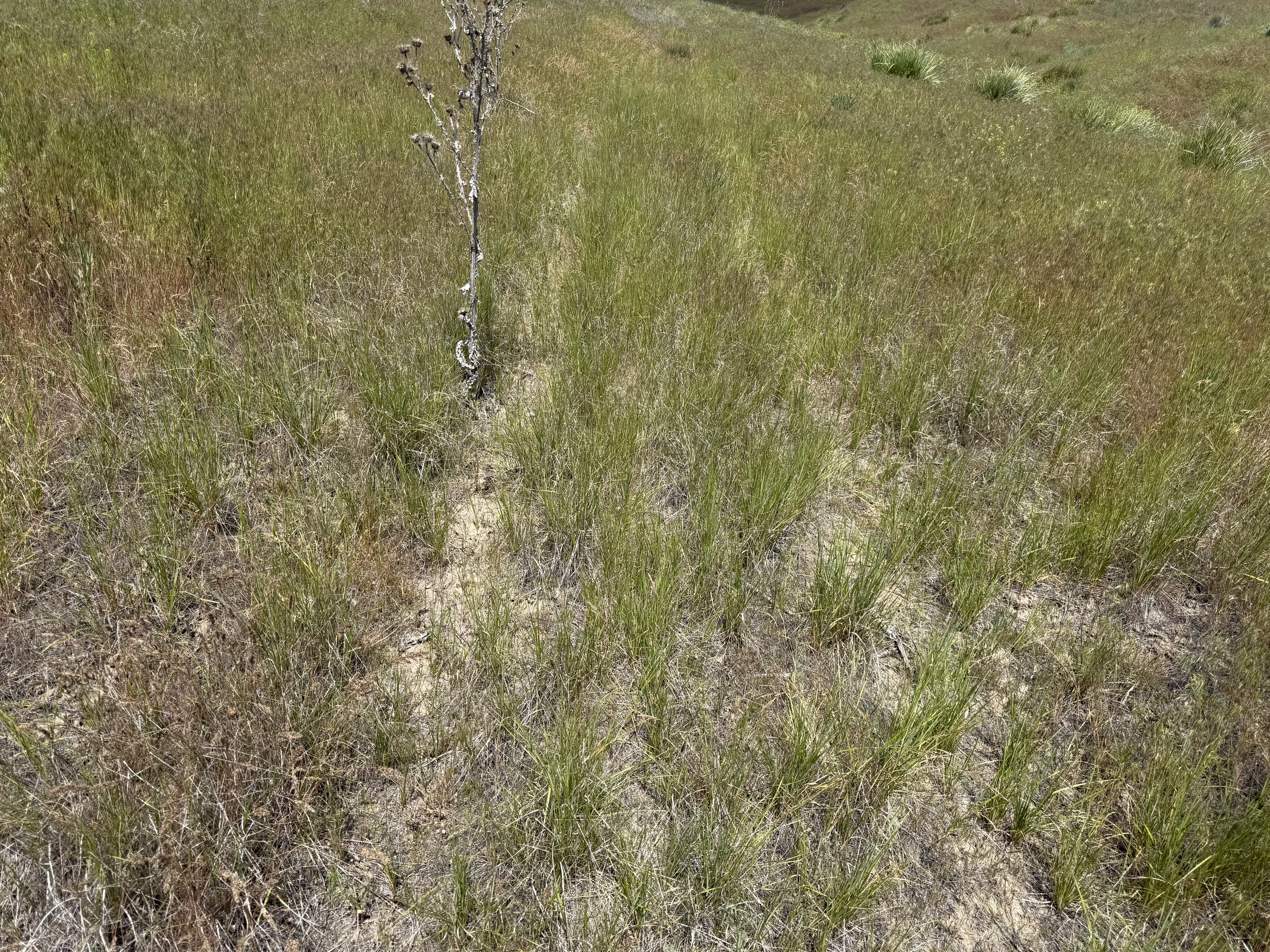
While I spent morning shadowing the Oregon Trail, given the plowed fields of the Treasure Valley, there was no physical sign of the trail. That changed as climbed into the foothills of Eastern Oregon. The landscape turned to rangeland and sagebrush, and I started seeing faint signs of the trail. It's less obvious "ruts", but places where the ground remains so compacted that the plant growth is stunted. I did my best to illustrate.
I had my own personal Oregon Trail experience this afternoon. I stopped six miles from my finish to walk down a rough gravel road to see some wagon ruts and changed out of my cycling shoes into sneaks to make that easier. But I failed to secure the sneaks, one was gone from my load when I rolled into my Airbnb. It was like a prompt from the game: "do you want to go back and look for your shoe?" While it was an extra hour in the sun, I got my shoe, and I will be a lot more careful packing tomorrow.